Bleeding gums when brushing: do you need hygiene or treatment?

Blood on your toothbrush or when flossing is a reason to discuss your gums with a dentist. This sign alone cannot identify the cause or determine treatment. If the bleeding recurs, arrange an examination: it can help establish whether professional hygiene is sufficient or care for gum disease is needed.
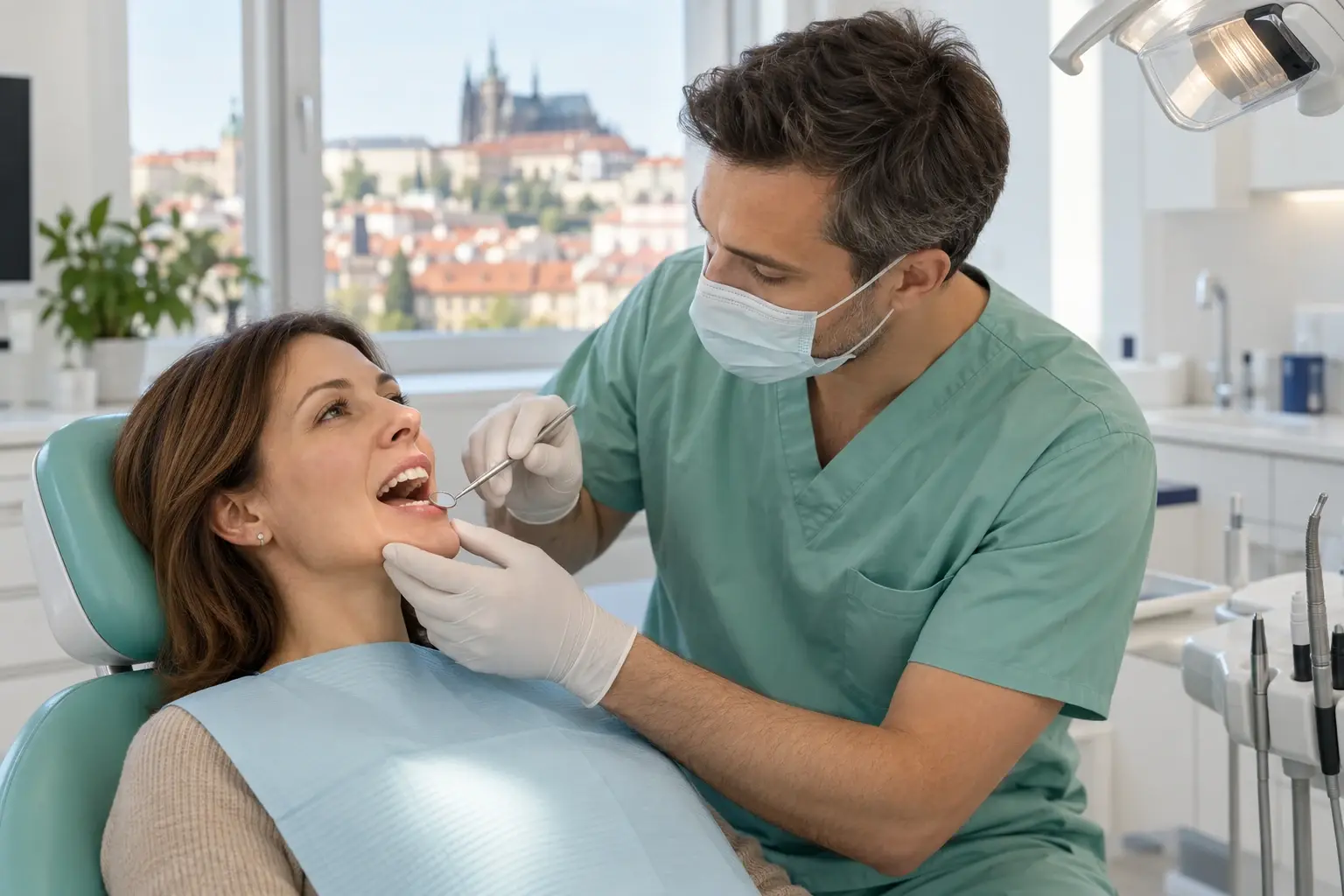
A dentist in mint-coloured scrubs examines an adult patient's gums with a dental mirror

Why gums may bleed

One possible cause is inflammation associated with dental plaque. If plaque is not removed, it can harden into tartar. Tartar is removed during professional care; a toothbrush at home cannot remove it.

Bleeding can also be associated with brushing too hard. Pregnancy and some medicines, including those that reduce blood clotting, may affect it. Tell the dentist what you take, especially if the symptom has appeared recently.

It helps to think about these details beforehand: does the bleeding occur near one tooth or in several places? Only when brushing, or on its own? Is there pain, swelling or bad breath? These observations help you describe the problem, but do not replace an examination.

How hygiene differs from gum treatment

Professional hygiene focuses on removing deposits and choosing home care. However, bleeding does not automatically mean that booking a cleaning alone is enough.

Gingivitis and periodontitis are different forms of gum disease. Periodontitis affects the tissues that support the teeth. It is therefore important to assess the gums and supporting tissues before deciding what care is needed. Regular care and dental visits help prevent gum disease and limit its consequences.

On the YouDent website you can read about professional dental hygiene and treatment of gum and periodontal disease. If you are unsure which service to choose, simply describe your symptoms when you contact us.

What the dentist may check

An assessment of the gums may include an examination, measuring the space between tooth and gum with a special instrument, checking tooth stability and discussing your general health. X-rays may be needed to assess the bone if indicated. Not every patient needs every investigation: the need is determined individually.

Before the visit, it is useful to prepare a list of medicines and questions. For example: what has caused the bleeding, which areas need particular care, what treatment is proposed and when its results should be assessed. Ask separately about the cost of the examination and proposed procedures.

What to do before your appointment

Use a soft toothbrush and avoid pressing hard. Maintain daily care: brush with fluoride toothpaste twice a day and clean between your teeth. You can discuss suitable interdental aids and technique with a professional.

Home care is important, but it cannot establish how deep the inflammation is or replace necessary treatment. Do not delay seeking care just because your gums do not hurt.

When to seek help sooner

Request an urgent dental assessment if your gums are very painful and swollen or your teeth become loose. If bleeding continues and you cannot stop it, seek medical help.

Swelling in the mouth or neck that makes breathing, swallowing or speaking difficult requires immediate medical help. Do not wait for a reply to a message or appointment request.

Frequently asked questions

Do I need an examination if bleeding occurs only when brushing?

Yes. Repeated bleeding when brushing is a reason to see a dentist. The absence of severe pain does not establish the condition of your gums.

Can I book hygiene straight away?

When contacting us, mention the bleeding, how long it has lasted and any other symptoms. Ask which visit to start with. Do not choose treatment by the service name alone.

Will one visit be enough?

This cannot be determined in advance. The care required depends on the condition of the tissues; further steps and follow-up are discussed after assessment.

How much will treatment cost?

See the prices section and ask about the cost when booking. Ask what the proposed plan includes and which expenses may need separate agreement.

Sources
  1. ADA — Bleeding Gums
  2. NIDCR — Periodontal (Gum) Disease
  3. European Federation of Periodontology — Gum diseases
  4. NHS — Gum disease
  5. NHS — Toothache

If you notice recurrent bleeding, contact YouDent, describe the problem and ask about available examination times. You can start simply: “My gums bleed when I brush, and I would like to understand the cause and the next steps.”

This material provides general information and does not replace an individual consultation.

Privacy and cookies

Organisation and contact details

U-Dent s.r.o. · IČO 28143876

Registered address
Peroutkova 570/83, Jinonice (Praha 5), 158 00 Praha
Clinic address
Peroutkova 531/81, 158 00 Praha
Legal contact
+420 776 314 587
Appointment phone number
+420 775 555 191
Director
Vitalii Iudin

This website runs on Tilda. Tilda's basic statistics count visits without analytics cookies. Google Analytics 4 is connected only with your separate consent to analytics: Google receives information about the page visit and device and uses analytics cookies. Permission for the Google Maps map does not include analytics. You can change or withdraw your consent through cookie settings.

The embedded Google Maps map is connected after you give permission. You can change your choice in cookie settings.

Calls or messenger links are opened only when you click. When you visit external services, their data-processing terms apply.

Cookie settings

Contact details and address

Google Maps is available after you allow the relevant cookies.

Open Google MapsCookie settingsPrivacy and cookies
Cookie settings
Analytics, advertising measurement including phone calls, and the external map require separate consent. You can change your choice in cookie settings.
Privacy and cookies
Cookie settings
Cookie and external content settings
Analytics, advertising measurement including phone calls, and the external map require separate consent. You can change your choice in cookie settings.
Privacy and cookies
Essential technologies
These save your cookie preferences and support the website's operation and security. This category is always enabled.
Google Analytics 4
Disabled
Allows Google Analytics 4 to use analytics cookies and receive page visit and device data. Enabled only after your consent. Google Maps permission does not enable analytics. You can change or withdraw your choice in cookie settings.
Advertising and phone call measurement
Disabled
Allows Google Analytics 4 and Google Ads to associate clicks on website buttons with an advertising click using cookies and click identifiers. Consent to Google Analytics 4 is also required. Message and form contents, the address of the specific treatment page you visit and its title are not sent. Ad personalization and remarketing are disabled. You can change or withdraw your choice. On the language homepages Google Ads may replace the telephone number to measure calls following an ad click. Google processes the IP address, device data, cookies and click identifiers; for a call, connection data, time, duration and caller number where available. This code does not enable call recording. The new call measurement starts only after renewed explicit consent to both analytics and this measurement.
External Google Maps map
Disabled
Allows the embedded map to load from Google's servers. When it loads, Google receives request data, including your IP address, and may use its own storage technologies. The map does not load until you give permission; the address and a regular map link remain available.