Toothache: when root canal treatment may be needed

Pain is a reason to seek assessment, but it does not show which procedure you need. Do not diagnose yourself from a reaction to cold or pain when chewing. First, it is important to find the cause, then discuss ways to help the tooth.

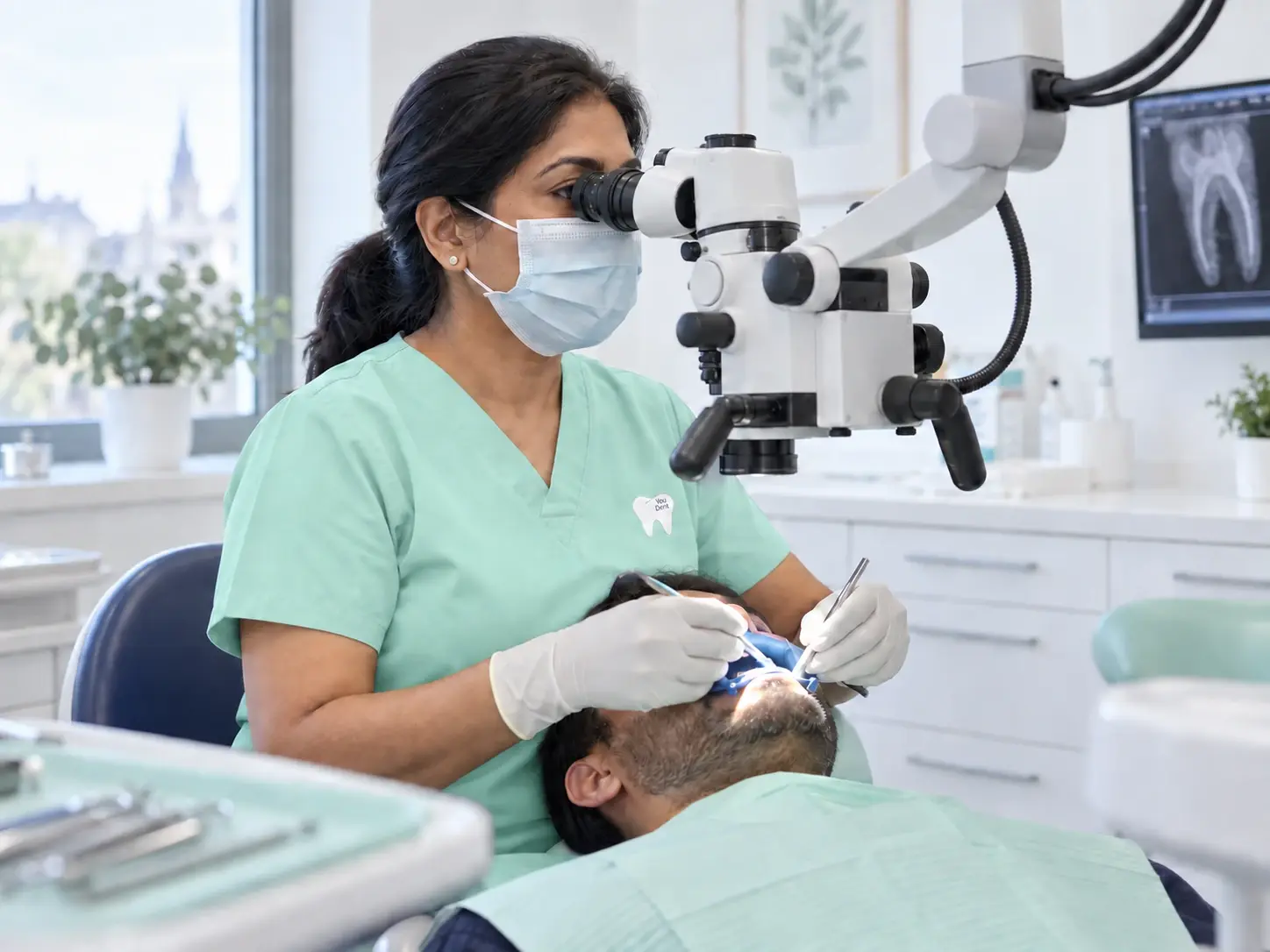
Illustration of endodontic treatment using magnifying equipment

Why pain alone cannot determine treatment

Pain may be associated with decay, a crack, a damaged filling, gum disease and other causes. A similar sensation does not mean the same diagnosis.

When contacting us, describe what happens rather than requesting a particular procedure: “it hurts when I bite”, “it reacts to cold for a long time” or “the pain started at night”. The dentist will clarify what examination and investigations are needed.

When root canal treatment is considered

Inside the tooth is the pulp, soft tissue containing nerves and blood vessels. If it is inflamed or infected, endodontic treatment may be needed. Possible causes include deep decay, a crack or an injury.

Treatment removes the affected pulp, cleans and fills the space inside the tooth. The dentist then discusses restoring the tooth with a filling or crown. The aim is to preserve the tooth where possible; it is not the solution to every toothache.

What to mention when booking and at the examination

Note when the pain began, whether it is constant and what triggers it. Mention swelling, fever, recent injury and previous treatment of this tooth, if applicable. Tell the dentist about medicines you take and any allergies.

If pain is severe or new symptoms appear, say so when contacting us. Ask about the earliest opportunity for a dental assessment. A messenger message does not confirm an appointment or replace urgent care.

When you should not wait for a routine appointment

If pain is accompanied by fever or swelling of the cheek or jaw, request an urgent dental assessment.

Swelling in the mouth or neck that affects breathing, swallowing or speaking, or spreads towards the eye or neck, requires immediate medical help. Do not wait for a reply to an appointment request.

What to ask about the plan

If the dentist proposes root canal treatment, ask what the examination showed, what options are available and how the tooth will be restored afterwards. Clarify pain relief, the sequence of visits and the cost of the full agreed scope.

A temporary filling may be used between stages; a crown is sometimes needed after treatment. Discuss the need for these steps and individual advice before treatment is completed.

Ask when the next check is due and how to seek help if your condition changes. The dentist chooses medicines and care advice after examination.

Questions and answers

Does every toothache mean root canal treatment is needed?

No. Pain has different causes. Root canal treatment is considered for an appropriate problem inside the tooth, not on the basis of a sensation alone.

Can sensitivity be a reason to arrange an examination?

Yes. For example, a prolonged response to hot or cold is a symptom to discuss with a dentist; it does not establish a diagnosis by itself.

Can a crown be needed after root canal treatment?

Yes. A crown is needed after treatment in some cases. The final restoration is discussed individually.

Sources
  1. NHS — Toothache
  2. AAE — What is a Root Canal?
  3. NHS — Root canal treatment

Discuss the next step

If you have toothache, describe your symptoms when contacting YouDent and ask about available examination times. Suitable treatment is discussed after the cause of the pain has been assessed.

Contact YouDent

This material provides general information and does not replace an individual consultation.

Privacy and cookies

Organisation and contact details

U-Dent s.r.o. · IČO 28143876

Registered address
Peroutkova 570/83, Jinonice (Praha 5), 158 00 Praha
Clinic address
Peroutkova 531/81, 158 00 Praha
Legal contact
+420 776 314 587
Appointment phone number
+420 775 555 191
Director
Vitalii Iudin

This website runs on Tilda. Tilda's basic statistics count visits without analytics cookies. Google Analytics 4 is connected only with your separate consent to analytics: Google receives information about the page visit and device and uses analytics cookies. Permission for the Google Maps map does not include analytics. You can change or withdraw your consent through cookie settings.

The embedded Google Maps map is connected after you give permission. You can change your choice in cookie settings.

Calls or messenger links are opened only when you click. When you visit external services, their data-processing terms apply.

Cookie settings

Contact details and address

Google Maps is available after you allow the relevant cookies.

Open Google MapsCookie settingsPrivacy and cookies
Cookie settings
Analytics, advertising measurement including phone calls, and the external map require separate consent. You can change your choice in cookie settings.
Privacy and cookies
Cookie settings
Cookie and external content settings
Analytics, advertising measurement including phone calls, and the external map require separate consent. You can change your choice in cookie settings.
Privacy and cookies
Essential technologies
These save your cookie preferences and support the website's operation and security. This category is always enabled.
Google Analytics 4
Disabled
Allows Google Analytics 4 to use analytics cookies and receive page visit and device data. Enabled only after your consent. Google Maps permission does not enable analytics. You can change or withdraw your choice in cookie settings.
Advertising and phone call measurement
Disabled
Allows Google Analytics 4 and Google Ads to associate clicks on website buttons with an advertising click using cookies and click identifiers. Consent to Google Analytics 4 is also required. Message and form contents, the address of the specific treatment page you visit and its title are not sent. Ad personalization and remarketing are disabled. You can change or withdraw your choice. On the language homepages Google Ads may replace the telephone number to measure calls following an ad click. Google processes the IP address, device data, cookies and click identifiers; for a call, connection data, time, duration and caller number where available. This code does not enable call recording. The new call measurement starts only after renewed explicit consent to both analytics and this measurement.
External Google Maps map
Disabled
Allows the embedded map to load from Google's servers. When it loads, Google receives request data, including your IP address, and may use its own storage technologies. The map does not load until you give permission; the address and a regular map link remain available.